
Evolution paths: singularity, nebula, neutron star or gravastar
What happens when you choose a path at Massive Star, and the abilities each remnant form gives you.
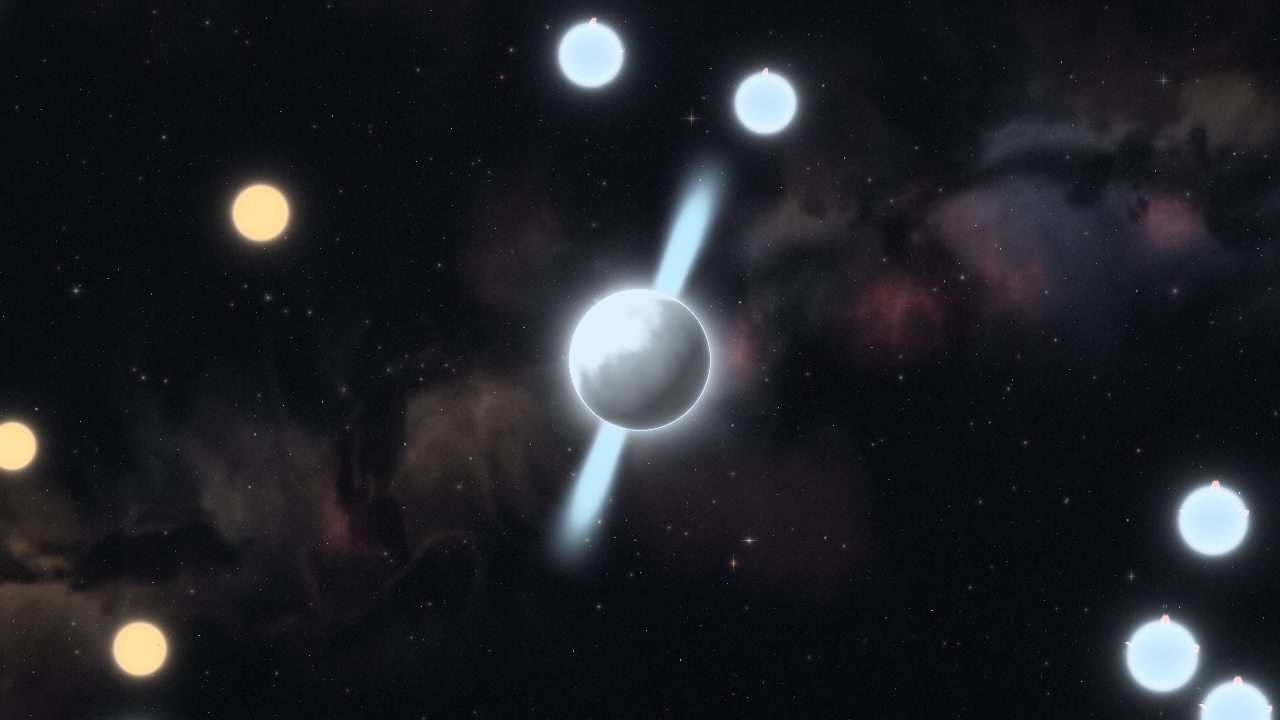
When you reach Massive Star, the game lets you choose how your star ends. CHOOSE PATH unlocks in flight and in the pause menu. You keep your current star, mass, movement, adaptations, companions and universe; only future growth changes. If you ignore the choice, you carry on through the normal stellar classes to Stellar Colossus and then the black holes.
How it works
- Every new class still needs five times the previous threshold.
- You can change your mind while still at the starting star stage. The first branch evolution locks it in for that journey.
- Each path passes through two precursor classes first. The supernova and the special abilities arrive when you reach the first remnant.
- The supernova's impulse is real: it can disturb nearby orbits.
Singularity
Contracting Supergiant, Collapsing Core, then Singularity and the black holes. Doubles your gravity but you move at two-thirds speed.
Nebula
Mass-shedding Star, Expanding Stellar Shell, then Emission Nebula, Molecular Cloud, Stellar Nursery and Galactic Nebula. A nebula has no gravity; instead it slowly dissolves the matter it overlaps.
Neutron
Compressed Stellar Core, Proto-neutron Core, Small Neutron Star, Magnetar, then Strange Matter. Neutron stars gain 35% speed; the Magnetar adds 50% gravity; Strange Matter gains a conversion field and 25% speed.
Gravastar
Dense Shell Star, Vacuum-transition Core, then Compact, Vacuum and Cosmic Gravastar. Gravastars gain 25 to 60% gravity and 40 to 55% collision protection, moving at 90% speed.
Real or invented?
Nebulae, neutron stars and magnetars are real. Strange matter and gravastars are hypothetical objects that physicists have proposed but never observed, and the game treats them as speculative forms. These transitions keep your mass and do not model the real mass a dying star loses. The Field Guide covers the main classes.